
Roofing Materials • Texas Homes • Central Texas
Types of Roof Materials: What Texas Homeowners Need to Know
The types of roof materials available today range from budget-friendly asphalt to premium natural slate, and the right choice depends on more than aesthetics. In Central Texas, where summer surface temperatures can push past 120°F and spring hail arrives with little warning, material selection directly affects longevity, energy costs, insurance eligibility, and how much maintenance a roof will need over its lifetime.
This guide breaks down the most common roof material types installed across the Hill Country so you can compare performance, cost, and durability before making a decision that will shape your home for decades.
Asphalt Shingles
Asphalt shingles remain the most widely installed roofing material in the United States, and for good reason. They offer the lowest entry cost, the broadest color and profile selection, and a straightforward installation process that keeps labor costs predictable.
Three-tab shingles sit at the economy end of the spectrum, while architectural asphalt shingles add dimensional depth, improved durability, and wind ratings that satisfy most Texas building codes. However, three-tab shingles are usually a lower-quality option and are not typically recommended for the weather conditions in Central Texas.
For homeowners choosing asphalt shingles, NextGen Roofing recommends Class 3 architectural shingles when appropriate because they are a stronger choice for impact rating, durability, and long-term roof performance.
Metal Roofing
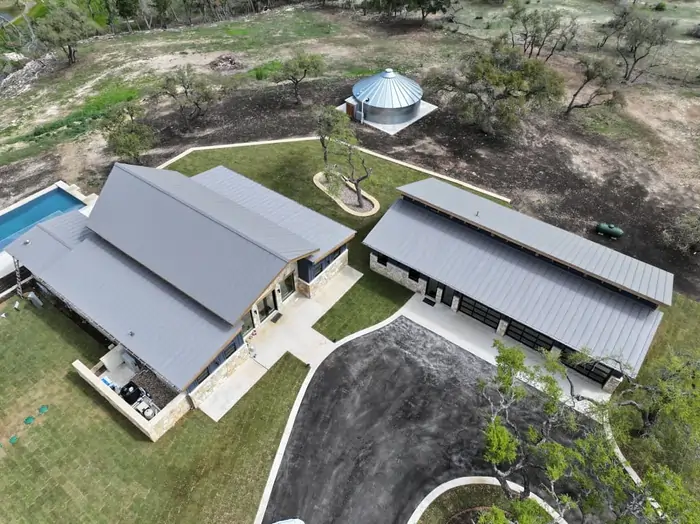
Metal roofing has moved well past the corrugated barn-panel image. Standing-seam systems use concealed fasteners and interlocking panels that resist wind uplift past 140 mph, and stone-coated steel delivers the look of tile or shake with a fraction of the weight.
Both options reflect solar radiation rather than absorbing it, which the DOE’s cool roof research confirms can meaningfully reduce attic temperatures and downstream cooling demand.
Compared to other roofing material types, metal roofs typically last 40 to 70 years with minimal maintenance. They often handle hail better than standard asphalt, and they shed debris and water faster on steep slopes.
While the upfront cost is higher than asphalt, the math often favors metal roofs in markets like Central Texas where UV, heat, and storm exposure can shorten the lifespan of less durable materials.
NextGen Roofing does not install metal over shingle overlays. A complete tear-off is necessary to expose the decking so it can be inspected for water damage, deterioration, or hidden issues from the original roof.
Tile Roofing
Tile roofing materials, typically made of clay or concrete, are fixtures across Central Texas neighborhoods where Mediterranean, Spanish Colonial, and Hill Country ranch architecture dominate. Clay tiles can last over 100 years in favorable conditions, and concrete tiles offer a similar profile at a lower price point. Both materials are fireproof, insect-proof, and highly resistant to UV degradation.
The tradeoff with this roofing material is its weight. Tile systems can run 600 to 1,100 pounds per square, which is 100 square feet, so the roof structure needs to be engineered or reinforced to carry the load.
Installation is labor-intensive and requires crews experienced with tile-specific underlayment and fastening patterns. Individual tiles can crack under foot traffic or hail impact, and replacements need to match the original profile and color exactly. That gets harder as product lines change over time.
For homeowners building new or replacing an existing tile roof, the premium pays for itself in longevity and near-zero material maintenance, but it is not the right fit for every structure or every budget.
Flat and Low-Slope Options
Not every roof has a steep pitch. Commercial buildings, modern residential designs, and additions with low slopes need materials engineered for standing water and membrane adhesion.
TPO roofing is one of the most common single-ply membrane systems in the Austin market. It is heat-welded at the seams, reflective, and cost-effective for large square footage. Roof coatings offer another path, extending the life of an existing flat roof by adding a seamless waterproof layer that also reflects UV.
Both of these flat roofing material options keep costs well below a full tear-off and replacement, and both qualify for energy-efficiency incentives when they meet reflectivity thresholds.
The key consideration with these roofing materials is proper drainage. Any low-slope system fails faster when water ponds rather than drains. Owners of flat-roof buildings should also consider the inspection cycle, since ponding water, membrane punctures, and flashing failures are harder to spot without walking the roof regularly.
Synthetic and Specialty Roofing Materials
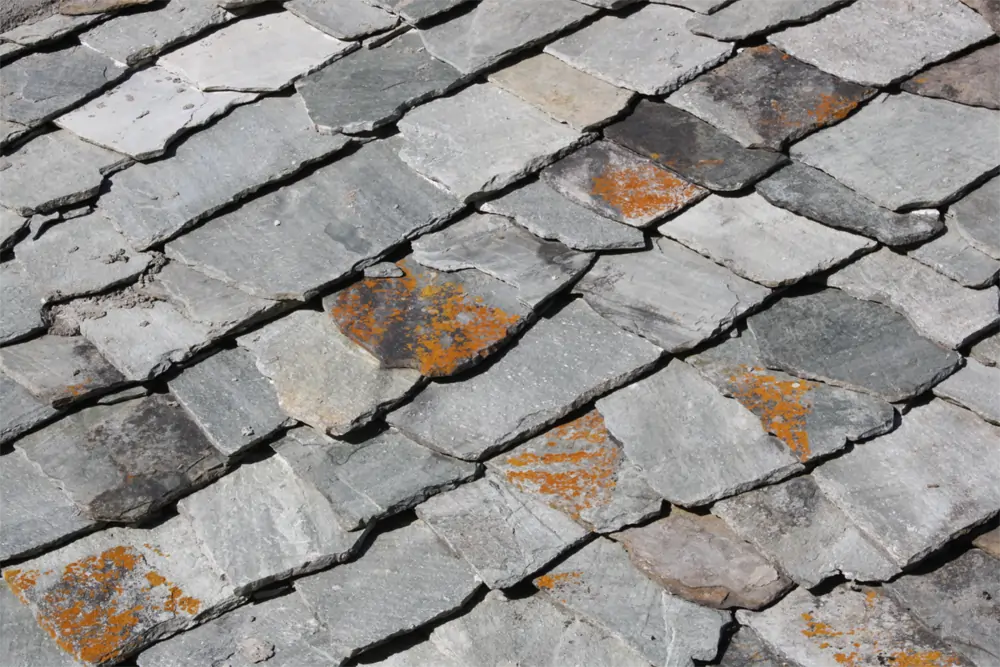
Homeowners drawn to the look of slate or cedar shake without the weight, cost, or maintenance now have credible synthetic alternatives. Composite slate, including products from DaVinci, replicates the profile of natural slate at roughly half the installed weight.
Stone-coated systems from DECRA and Tilcor combine a steel core with ceramic-coated stone granules for Class 4 impact resistance and a 50-year-plus expected lifespan.
Specialty manufacturers like Ludowici and Westlake serve the premium architectural segment where custom color matching, historical accuracy, and century-scale durability justify the investment.
These products are niche, but they solve problems that off-the-shelf materials cannot, particularly on historic homes, high-visibility custom builds, and properties where HOA guidelines require a specific aesthetic that standard shingles or metal panels cannot deliver.
How to Choose the Right Material for Your Home
Material selection starts with four practical questions. First, what is the roof’s pitch? Steep slopes open up shingle, metal, tile, and synthetic options, while low slopes narrow the field to membrane and coating systems.
Second, what does the structure support? Tile and natural slate require framing that can handle the weight.
Third, does the HOA or historic district restrict material types, profiles, or colors?
Lastly, what is the realistic budget, not just for installation, but for maintenance and replacement over the next 20 to 50 years?
Hill Country weather adds a fifth factor to consider: hail and wind exposure. A Class 4 impact rating, available across asphalt, metal, stone-coated steel, and composite products, can reduce insurance premiums and prevent the cycle of storm damage claims that shortens the useful life of a roof.
Choosing a material rated for the weather it will actually face is the single most effective way to protect both the roof and the investment underneath it.
A quick roof inspection of the existing system often clarifies whether a repair, overlay, or full replacement makes the most financial sense. Deck condition, ventilation balance, and current damage all factor into the decision, and all of them are easier to evaluate before committing to a material.
Roof Pitch
Steep slopes allow shingles, metal, tile, and synthetic options. Low slopes usually require membrane or coating systems.
Structure
Tile and natural slate need framing that can support heavier materials.
HOA Rules
Some neighborhoods limit roof material types, profiles, or colors.
Budget
Think beyond installation and compare maintenance, insurance, and replacement timelines.
Hail and Wind
Class 4 impact-rated materials can help protect against storm damage.
Inspection
Decking, ventilation, and current damage should be checked before choosing a roof material.
Considering Types of Roof Materials? Talk to NextGen Roofing
Considering an upgrade?NextGen Roofing installs and services every material covered in this guide, from standard architectural shingles to specialty tile and composite systems. Our crews are licensed, bonded, and certified, and every estimate is backed by our meet-or-beat any written estimate guarantee and 100% satisfaction guarantee. Financing options are available for full installations and major replacements.Call to schedule a consultation or request a roof inspection across Austin, Dripping Springs, Wimberley, Bee Caves, and West Lake Hills. We’ll walk the roof, talk through the options that fit your structure and budget, and put a written estimate in your hands—no stress, hassle, or obligation required.